
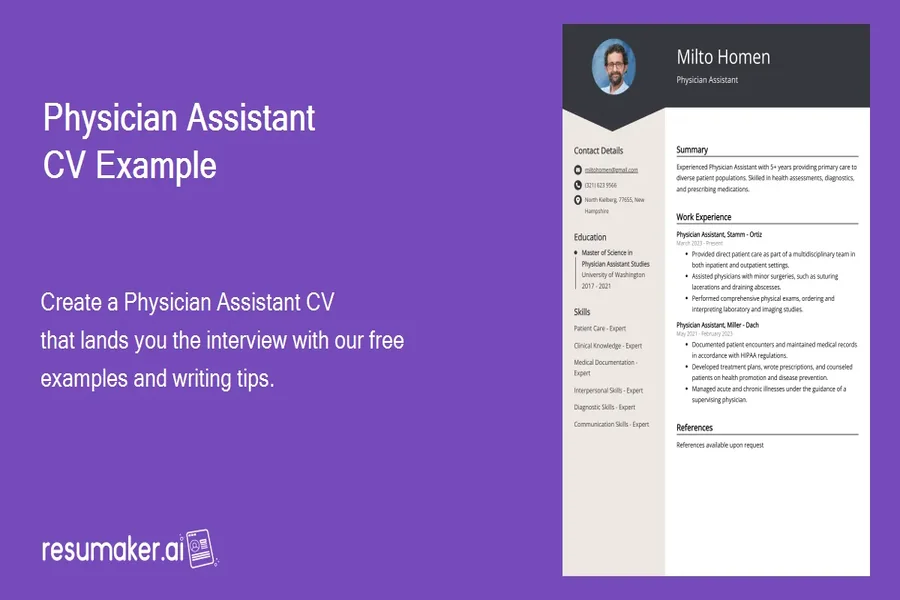
Creating your first CV as a near or new graduate can feel intimidating. After all, new PAs don’t have much experience to include. That said, it’s possible to create an effective CV even with minimal practical experience. Read on to find some tips for what to include, what to avoid, and how to get started.
Format Everything Correctly
When you respond to job listings for a PA, you want to make a good first impression. Before potential employers even read your CV, they’ll notice whether it looks professional. Make sure it does by formatting the CV correctly. Your name should be present in a large font at the top, along with your email address and phone number. The CV should include education, clinical experience, certifications, licensures, and references.
Include Only Relevant Information
Since new graduates don’t have much clinical experience, it can be tempting to try to fill in the gaps by including extra information in the education section. Avoid that temptation. Your CV should include information about where you went to undergrad and graduate school. You don’t need to include information about your high school or GPA.
Similarly, your CV should concisely list clinical rotations and keep details to a minimum while listing all the rotations you’ve completed, even if they don’t seem immediately relevant. Include only the rotation title, location, and timeline. Plan to remove the clinical rotations section from your CV after you begin your first PA position.
Choose the Right Optional Sections
All that’s required in a CV is education, experience, licenses, and references. If you choose to go beyond that, tread carefully. Some people choose to include sections on additional experience if they have had prior careers that are relevant to becoming a PA. Others include publications in medical journals or presentations at conferences. Separate sections for awards or second languages can also be helpful.
Remember That a CV Is Not a Standard Resume
People working in other industries write up standard resumes. They have a slightly different format, often including sections on objectives, skills, volunteering, and other activities. A CV isn’t a resume. There’s no need to list objectives, and employers will assume you have the skills required to provide patient care if you are licensed in the field. If you do choose to include a skills section, make sure it’s relevant and specific.
In most cases, you should also leave non-medical work off your CV unless it is specifically related to your future career as a PA. There are, of course, some exceptions. If you’ve held non-medical roles at a hospital where you are applying for a PA position, for example, that’s worth including in your CV.
List Certifications
You should plan to list any certifications you hold in addition to your license. These should include certifications like basic life support, cardiac life support, and your National Commission on Certification of Physician Assistants certification.
If you’re a near-graduate and have not yet taken your PANCE to become certified, you can list the NCCPA certification with an anticipated date. You can also include memberships if it’s relevant, but don’t feel that you need to join professional organizations just to list them on your CV.
Start Applying for Jobs
If you’ve already become certified as a PA or plan on getting your certification soon and want to apply for jobs early, it’s time to take action. Polish your CV now and start applying to job listings as soon as possible.